
Buying a dishwasher feels like it should take five minutes. In reality, the choice touches your kitchen layout, your water bill, your evenings, and roughly the next ten years of washing up. So a little thought upfront pays off more than people expect.
Here at Hadjikyriakos & Sons, we have fitted Cypriot kitchens with appliances since 1886, and the one thing we notice again and again is this: buyers who understand a handful of basics choose better and regret less. That is what this buying guide sets out to do. No jargon for its own sake, just the decisions that actually shape your day.
We will work through types, sizing, energy and water use, wash programs, and the features worth paying for. Take what helps, skip what does not.
Why a Good Dishwasher Matters More Than You Think
There is a myth that a dishwasher is a luxury. Odd, really, because a decent machine uses far less water than washing the same load by hand, and it frees up time you would rather spend elsewhere. On a hot Cyprus evening, nobody wants to stand over a sink.
Modern dishwashers also clean at temperatures your hands could never tolerate, so glasses come out clearer and cutlery more hygienic. The catch is that not every model suits every home. A machine that is too big wastes resources; one too small means running it constantly. Matching the appliance to your household is the whole game.
The Main Types of Dishwasher
Before size or features, settle on the format. This single decision shapes installation, cost, and how the finished kitchen looks. There are four main routes, and each suits a different situation.
Freestanding Machines
A freestanding dishwasher stands on its own, finished on all visible sides, and slots into any gap with a water and power connection. It is the most flexible choice by a distance. You can take it when you move, swap it out in an afternoon, and pick from the widest range of prices and finishes.
For renters and first-time buyers especially, this format makes obvious sense. Most machines sold in Cyprus are freestanding, and honestly, for the majority of homes that remains the sensible default.
Built-In and Fully Integrated Models
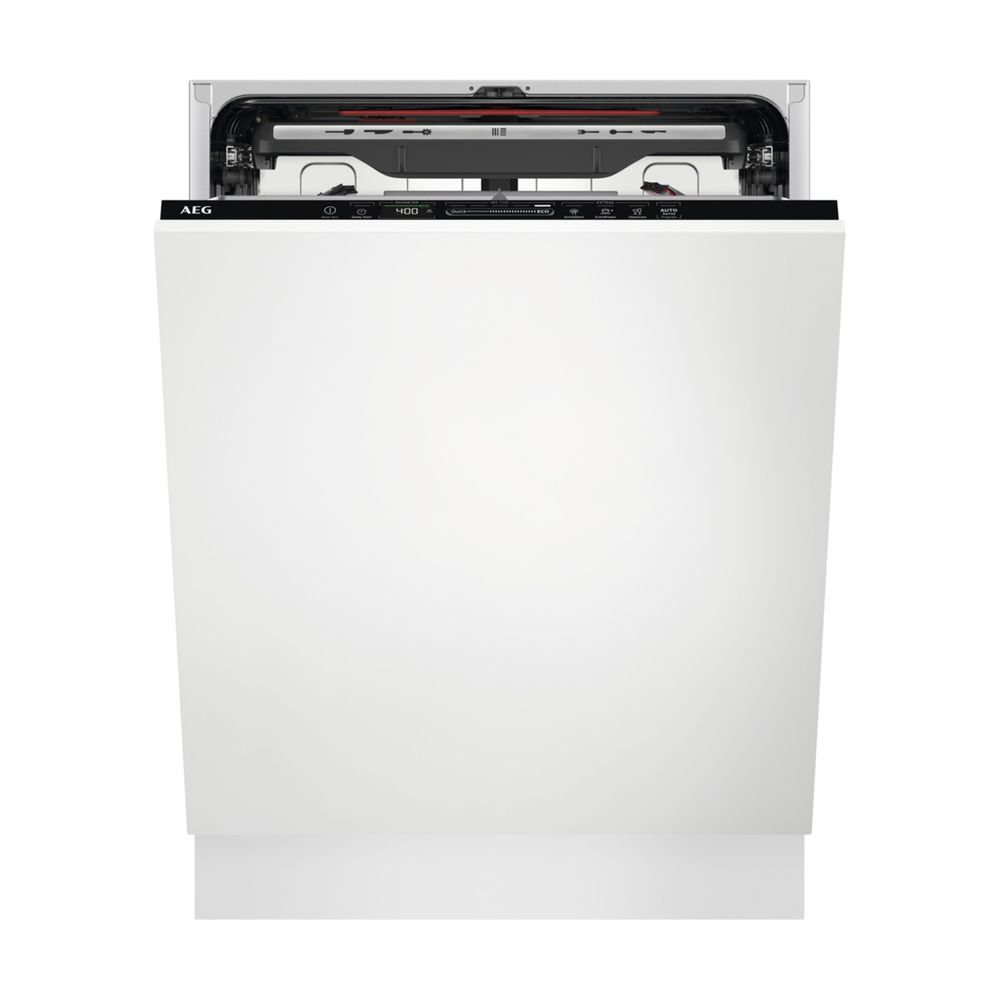
Built-in dishwashers fit inside your cabinetry for a tidy, streamlined kitchen. A semi-integrated version shows a slim control panel along the top; a fully integrated one hides completely behind a matching cabinet door, so the appliance disappears entirely.
The look is lovely, particularly in a designed kitchen. But you pay more, and you commit to fixed cabinet dimensions, which makes swapping the unit years later a touch fiddly. Plan this during a renovation rather than as an afterthought.
Slimline and Compact Options
Not every kitchen has room for a full-width machine. Slimline dishwashers measure around 45 cm across instead of the usual 60 cm, trading a little capacity for a smaller footprint. They suit galley kitchens, apartments, or smaller households nicely.
Compact countertop units go smaller still, sitting on a worktop for a couple or a single person. Less common, but genuinely useful where floor space is scarce.
Portable and Countertop Machines
Portable dishwashers roll on castors and connect temporarily to a tap, then tuck away when the cycle finishes. They are a clever answer for rented homes where plumbing changes are off the table.
Would I pick one as a permanent fixture? Probably not, since they cost more per wash and hold less. For a specific situation, though, they solve a real problem that fixed machines cannot.
Getting the Size Right
Once the format is settled, dimensions come next. Get these wrong and the appliance either will not fit or will look awkward jutting out. A tape measure is your friend here.
Standard vs Slimline Dimensions
Full-size machines run about 60 cm wide, 60 cm deep, and 82 to 85 cm tall, designed to sit under a standard worktop. Slimline models keep the same height and depth but narrow the width to roughly 45 cm. Height is usually adjustable via the feet, which helps line the top up neatly with your counter.
Here is a quick reference for the common formats:
| Format | Width | Typical place settings | Best for |
|---|---|---|---|
| Standard | 60 cm | 12–14 | Families, regular hosts |
| Slimline | 45 cm | 9–10 | Couples, small kitchens |
| Compact / countertop | ~55 cm (benchtop) | 6 | Singles, tiny spaces |
Measuring Your Space
Measure the gap in three directions: width, depth including any pipework at the back, and height to the underside of the worktop. Then allow a little clearance for airflow and the water hoses behind.
Check the door swing as well. Can it drop fully open without hitting an island or an oven opposite? And trace the delivery route through your home. A perfect machine is no help if it cannot reach the kitchen.
Place Settings and Capacity Explained
Capacity is measured in place settings, not litres. One place setting covers the crockery and cutlery for a single person at a meal: plate, bowl, glass, cup, and the relevant knives and forks. A machine rated for 14 settings holds fourteen such sets at once.
As a rough guide, a couple manages fine with 9 to 10 settings, while a family of four or more benefits from 13 or 14. Buying bigger than you need means running half-empty loads, which wastes water and energy. Slightly generous is fine; wildly oversized is not.
Reading the Energy Label
The energy label was rescaled across the EU back in 2021, moving to a clean A-to-G format and retiring the old A+++ tier. The new scale was set deliberately strict, so top marks stay rare.
What this means for you: an A-rated dishwasher today is genuinely excellent, and B or C models remain very efficient. Do not judge the letter against your memory of the old system, since the goalposts moved. Beyond the grade, the label shows annual energy use in kWh and water consumption per cycle, both of which feed straight into your running costs.
Water Usage and Why It Matters Here
Water deserves special attention in Cyprus. The island sees genuine water scarcity, so a machine sipping less per cycle is not just cheaper, it is the responsible pick. Efficient modern dishwashers use surprisingly little, often under ten litres for a full load, far below hand washing.
There is a second local wrinkle: hard water. Much of Cyprus has hard, mineral-heavy supply, which leaves limescale and cloudy glasses over time. This is why a built-in water softener, plus regular dishwasher salt and rinse aid, matters more here than in soft-water regions. Keep the salt topped up; your glasses will thank you.
Noise Levels and Open-Plan Living
Kitchens increasingly open onto living and dining areas, which makes noise a real consideration. A loud machine ruins a quiet evening if it runs while you relax nearby.
Noise is measured in decibels, and lower is quieter. Anything around 44 dB or below counts as quiet; the best models, driven by brushless inverter motors, dip into the high 30s. If your kitchen flows into the lounge, or you run the machine overnight, spend a little extra on quiet operation. You will notice the difference every single day.
Wash Programs Worth Having
Program lists can look overwhelming, dozens of cycles you may never touch. In practice, a handful do most of the work. Focus on those rather than the marketing count.
Everyday and Eco Cycles
The eco program is the one you will lean on most. It runs longer at a lower temperature, using less energy and water, and it is the cycle the energy label is actually based on. Counterintuitively, longer often means greener here.
An automatic or sensor cycle is the other everyday hero. It reads how dirty the load is and adjusts water and time to match, which takes the guesswork out of daily washing.
Intensive and Fast Options
For baked-on pans and greasy roasting trays, an intensive program cranks the temperature up, often to around 70 degrees, to shift stubborn residue. Handy after a big family lunch.
At the other end sits the fast or one-hour cycle, ideal when you need plates back quickly before guests arrive. It uses more energy for the speed, so treat it as an occasional convenience rather than your default.
Racks, Baskets and Loading Flexibility
How a dishwasher loads matters as much as how it washes. A rigid interior that fights your awkwardly shaped items turns every load into a puzzle. Flexibility inside is worth real money.
The Third Rack Question
Many mid-range and premium machines now add a shallow third rack along the top, dedicated to cutlery and utensils. It frees space in the main baskets below and keeps forks from nesting together, which improves the clean.
Is it essential? No. But once you have used one, going back feels like a step down. For households that run full loads often, that top rack quietly earns its keep.
Adjustable and Foldable Racks
Look for height-adjustable upper baskets and fold-down tines. These let you drop the top rack to fit tall wine glasses, or flatten sections to load a big pot that would otherwise never fit.
The more the interior adapts, the fewer items you end up washing by hand afterwards. That adaptability, frankly, separates a merely adequate machine from one you actually enjoy using.
Features That Genuinely Help
Feature lists get long and, let us be honest, a bit padded. Some additions change daily life; others sound clever and gather dust. Here is where I would focus.
Drying Systems
Drying is where cheaper machines disappoint. Basic condensation drying leaves plastic items damp. Better systems, such as an auto-open door that swings ajar at the end to let steam escape, dry far more thoroughly using no extra energy. One popular option, marketed by Bosch as EfficientDry, does exactly this, and the results on a full load are noticeably better.
Leak Protection and Smart Control
A quality leak-protection system, sometimes covered by a lifetime guarantee, shuts off the water supply if it detects a fault. Given the damage a kitchen flood causes, this feature alone can justify a step up in model.
Smart control adds Wi-Fi, letting you start a cycle or check progress from your phone. Genuinely useful? Sometimes, especially with cheaper overnight electricity. Essential? Not really. Nice to have, I would say, rather than a deciding factor.
Finishes and Panel-Ready Choices
Since a freestanding machine sits on show, its finish matters. Stainless steel, or inox, is the timeless pick and hides fingerprints reasonably well. White suits classic kitchens, and black or graphite tones look sharp in modern spaces.
Panel-ready, or fully integrated, machines skip the visible finish entirely, taking a custom door that matches your cabinetry. That is the route for a seamless, hidden look. It costs more and needs planning, but the result is worth it in a considered kitchen design.
Which Dishwasher Should You Buy?
Still weighing it up? Here is a short decision framework. It trades nuance for clarity, giving you a sensible starting point for common situations.
| If you… | Choose… |
|---|---|
| Rent or move often | Freestanding standard |
| Have a small kitchen | Slimline 45 cm |
| Want a seamless designer kitchen | Fully integrated |
| Have a large, busy family | Standard 60 cm, 14 settings |
| Live alone or as a couple | Slimline or compact |
| Run the machine near a living area | A quiet model, 44 dB or below |
| Deal with hard Cyprus water | One with a built-in water softener |
Most people match more than one row, naturally. When two pull in different directions, let your kitchen dimensions settle it. Space usually wins.
Once you have chosen, the buying part should be easy. Hadjikyriakos & Sons runs its own service centre with a full range of spare parts, so a repair years down the line does not become a hunt for components. We spread the cost with six monthly interest-free installments on Visa, under standard JCC terms, and our teams in Nicosia, Limassol and Paphos can talk you through the options in person. If you would rather browse first, the dishwashers category page lists current models with their capacities and features side by side, and the wider laundry and dishwashers section covers washing machines and dryers if you are kitting out a whole utility space.
Common Questions
How many place settings do I need for a family of four?
A family of four is usually well served by a standard 60 cm dishwasher rated for 13 or 14 place settings. That capacity handles daily meals plus the occasional larger load without forcing you to run half-empty cycles, which waste water and energy. Households that host often, common in Cyprus, should lean toward 14. Smaller families or couples can drop to a slimline 45 cm machine with 9 or 10 settings, which fits tighter kitchens while still covering everyday washing comfortably.
Are eco programs actually better than normal cycles?
Yes, in most cases. The eco program runs at a lower temperature over a longer period, which uses less electricity and water than faster, hotter cycles. It is also the setting official energy labels are measured against, so it reflects the machine’s rated efficiency. The longer run time puts some people off, but the cleaning results are typically just as good. For everyday loads in a Cyprus home, where water and energy both cost, the eco cycle is the sensible default choice.
Does hard water affect dishwashers in Cyprus?
Hard water is common across much of Cyprus and does affect dishwashers. The high mineral content leaves limescale deposits and cloudy marks on glasses over time, and it can shorten a machine’s lifespan if left unmanaged. Most quality dishwashers include a built-in water softener that you keep topped up with dishwasher salt, alongside rinse aid for spot-free drying. Maintaining both is important locally. Running an occasional machine-care or cleaning cycle also helps clear buildup and keeps performance steady.
What is the difference between semi-integrated and fully integrated?
Both fit inside kitchen cabinetry for a built-in look, but they differ in one visible detail. A semi-integrated dishwasher shows a slim control panel along the top edge, so you operate it directly and can see the cycle status. A fully integrated model hides completely behind a matching cabinet door, controls included, so the appliance vanishes into the kitchen. Fully integrated gives the cleaner, seamless finish preferred in designer kitchens, while semi-integrated offers easier access to the controls at a slightly lower price.
Is it worth paying more for a quieter dishwasher?
For open-plan kitchens or homes where the machine runs overnight, yes, a quieter model is worth the extra. Noise is measured in decibels, and quiet dishwashers sit around 44 dB or lower, with premium units driven by inverter motors reaching the high 30s. Since kitchens increasingly connect to living and dining areas, a loud machine disrupts conversation and relaxation. If your dishwasher sits in a closed, separate kitchen, noise matters far less, and you can safely prioritise other features instead.